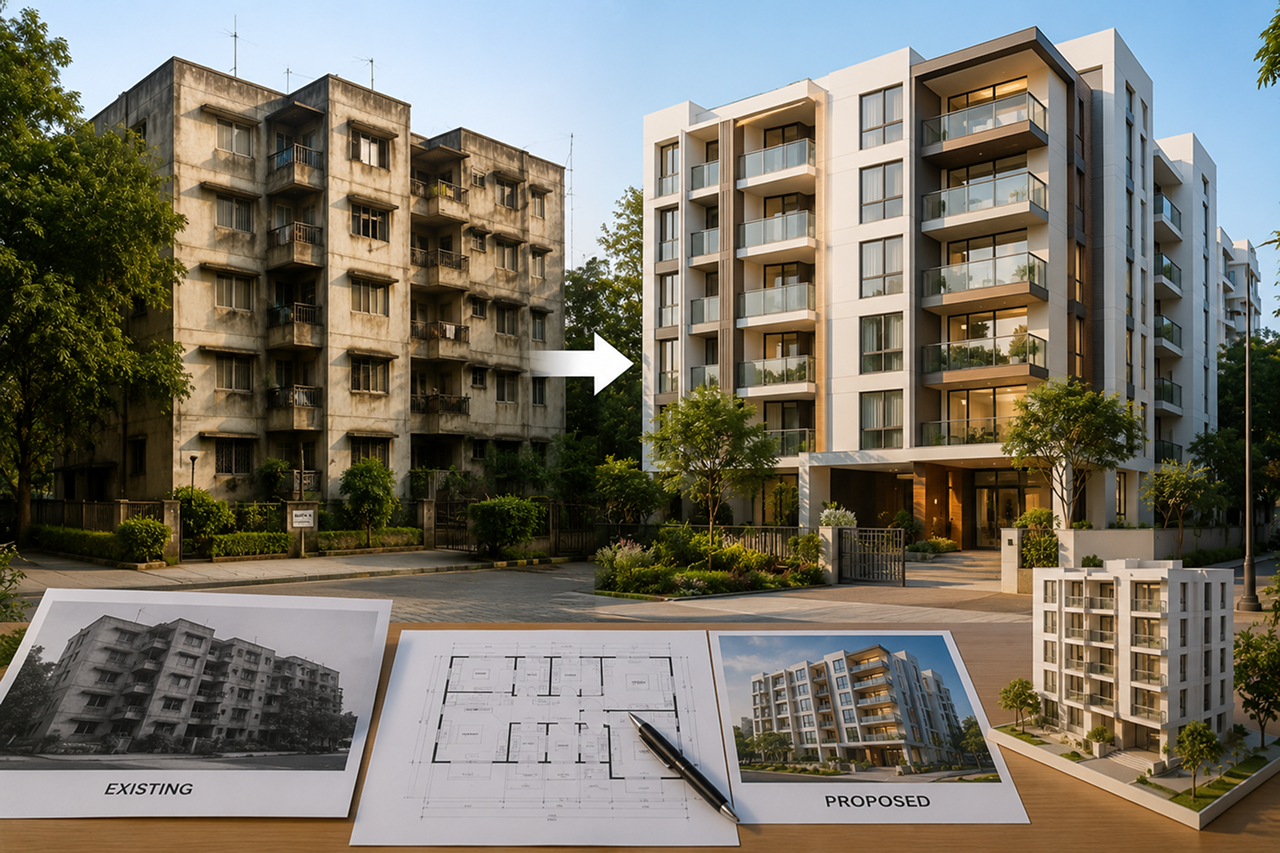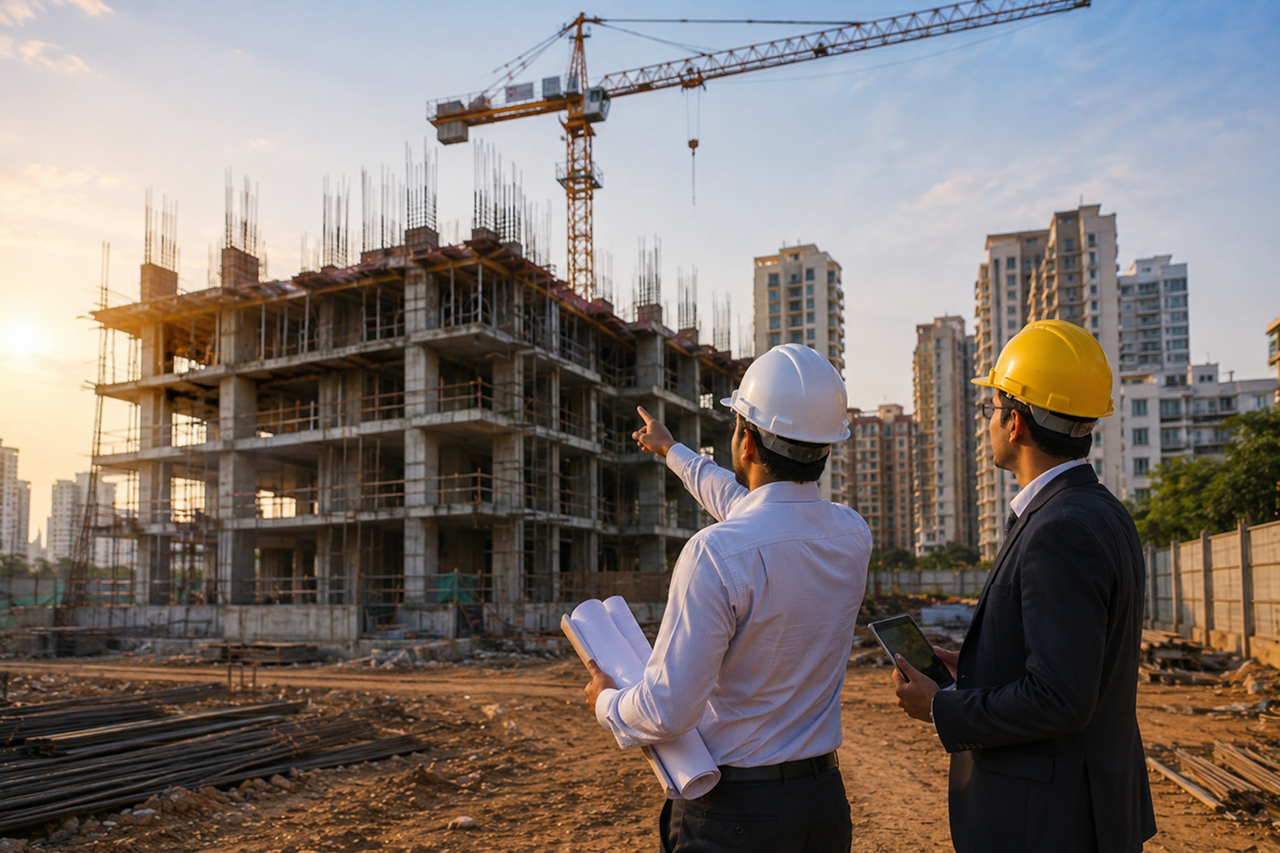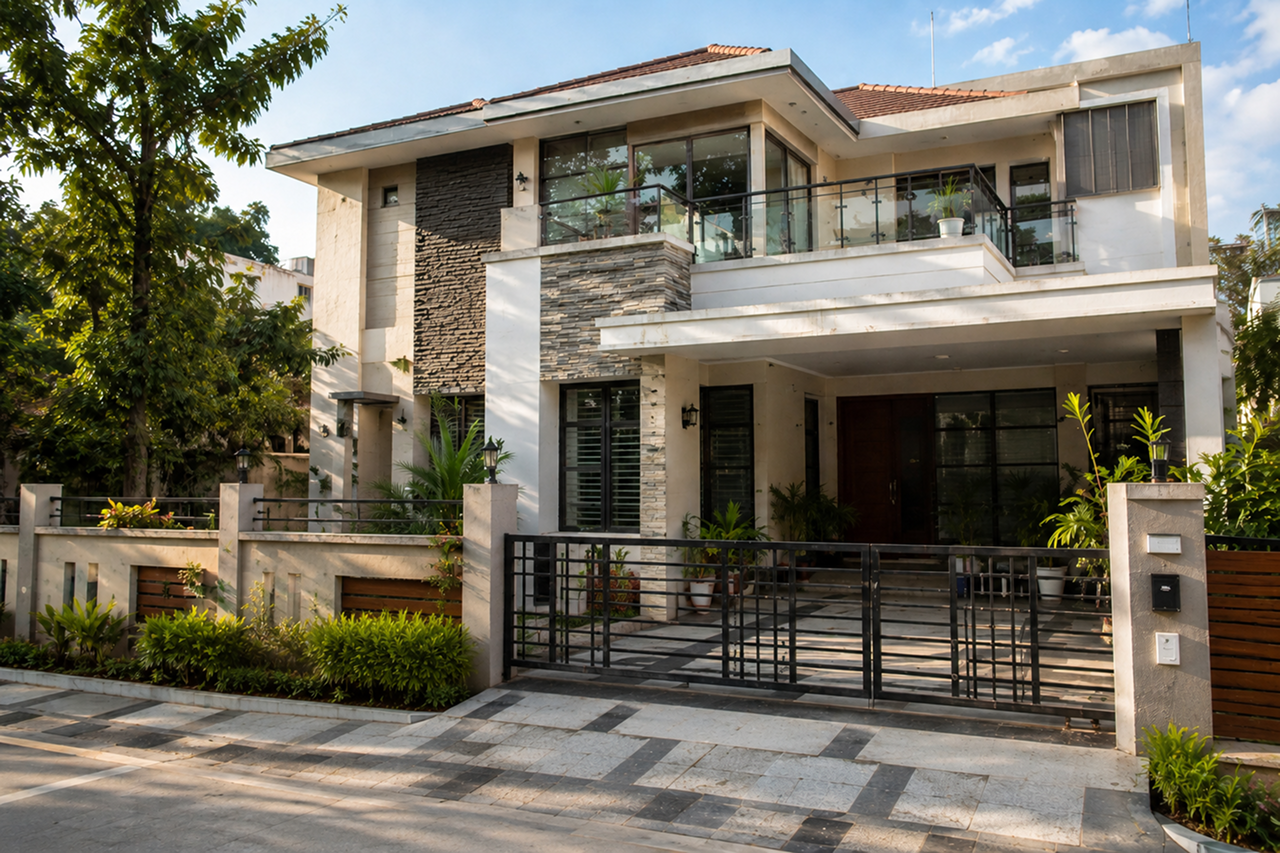
The construction industry is undergoing a profound transformation driven by climate awareness, technology, and evolving regulations. As India targets net-zero emissions and energy-efficient infrastructure, construction firms like Amika Infratech are leading the charge by embedding sustainability into every phase of a project — from material sourcing to structural design and post-construction operations.
The most direct way to reduce a building's environmental footprint is to rethink the materials used. Traditional Portland cement alone accounts for nearly 8% of global CO₂ emissions. Today, forward-thinking builders are turning to alternatives that offer superior performance with far less environmental impact.
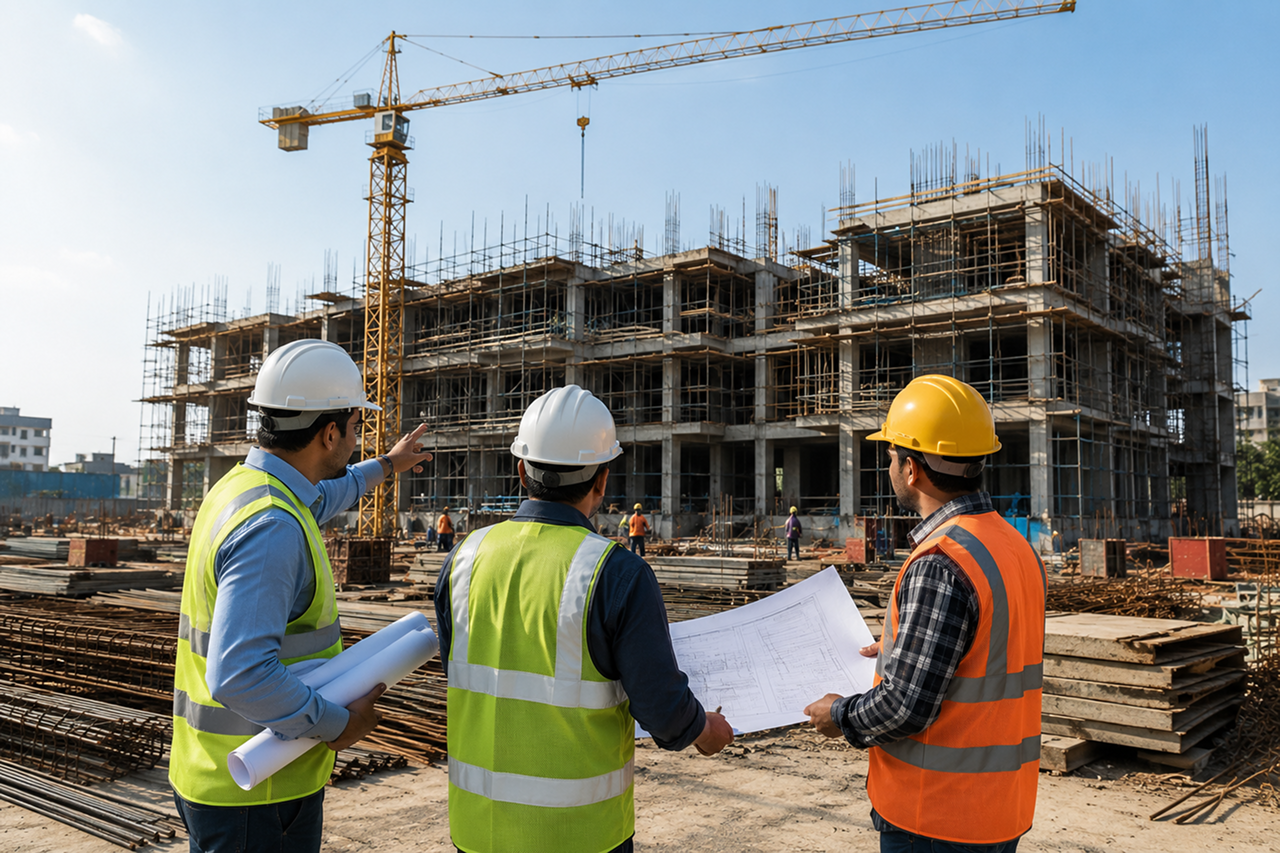
Modern buildings are designed to consume dramatically less energy over their operational life. This involves a holistic approach — integrating passive solar design, superior insulation systems, natural ventilation strategies, and smart building automation systems (BAS) that learn and adapt to occupancy patterns.
"Sustainability in construction is no longer a luxury or an afterthought — it is a fundamental requirement for the future of our built environment." — Amika Infratech Design Philosophy
At Amika Infratech, we factor in the building's orientation relative to the sun path during the design phase itself. South-facing windows maximise passive solar gains in winter while extended overhangs prevent summer overheating — all without adding operational energy costs.
Water scarcity is a critical issue across urban India. Sustainable buildings today incorporate multi-layered water conservation systems that reduce potable water demand by 30–50%. Key strategies include:
The Indian construction sector generates an estimated 530 million tonnes of construction and demolition (C&D) waste annually. Sustainable construction practices adopt a circular economy model — designing for disassembly, minimising on-site waste, and treating demolition debris as a valuable resource rather than waste.

Amika Infratech's site management protocols include pre-construction material planning to minimise excess ordering, on-site segregation of waste streams, and partnership with licensed C&D waste recyclers in Pune to divert over 85% of site waste from landfills.
Technology is the enabler that makes sustainable buildings truly intelligent. Building Information Modelling (BIM), IoT-enabled energy monitoring, and AI-driven HVAC controls are no longer exclusive to mega-projects — they are being democratised across mid-range residential and commercial developments.
The future of construction in India is unambiguously green. Developers who embrace these practices today will be better positioned to meet tomorrow's regulatory requirements, attract ESG-conscious investors, and deliver buildings that remain relevant and valuable for decades to come. At Amika Infratech, sustainability isn't a checkbox — it's embedded in our construction DNA.